
By Reinoud Kaasschieter - 2015-10-19 [23] Brussel, CC BY 2.0, https://commons.wikimedia.org/w/index.php?curid=78779879
A long delayed expansion of ETS to long-haul flights
Last week, the EU announced the outcome of its long-awaited review on the scope of its Emissions Trading Scheme (ETS), a “cap and trade” scheme for the carbon emissions of Europe’s energy intensive industries. In particular, the big question was whether the scope would be extended to cover long-haul flights, instead of being restricted as it is today to flights within the EEA.
To understand what the EU just announced, we need to go through a bit of background first, starting with the history of the ETS.
The history of ETS and its application to aviation
The ETS began in 2005, but it did not initially cover aviation. The extension to aviation was agreed in 2008, with airlines starting to have to pay for allowances in 2012. To start with, airlines received free allowances up to a baseline level, reflecting historic emissions. Those free allowances reduced a bit each year, but the EU subsequently decided to accelerate the phase out of free allowances, with free allowances ending completely in 2026.
I need to briefly cover the geographical scope of the EU ETS scheme. As well as EU countries, it also includes the three non-EU EEA members (Norway, Iceland and Liechtenstein). So I’ll generally use the term “EEA countries” when I refer to countries that are covered by the EU ETS scheme. Switzerland is not in the EEA and operates a legally separate scheme, but it is formally linked, so for much of what I’ll cover you should probably take “EEA countries” to also include Switzerland. The UK was originally included, but since Brexit it also now operates a legally separate scheme. It is not formally linked and rules have slightly diverged. Although discussions have been taking place about “alignment”, I’ll treat the UK ETS scheme as worthy of separate consideration and so the UK is explicitly not included when I talk about EEA countries.
Initially, it was intended that ETS should cover all flights arriving or departing from airports in EEA countries, but lobbying by airlines, the USA and China led to a “suspension” of the proposal for flights where the departure or the arrival was outside the EEA. Those excluded flights are often erroneously referred to as “international”, a description that implies that flights between two EEA countries are “domestic”, which they are not. Sometimes the excluded flights are referred to as “long-haul”. Whilst it is true that all long-haul flights are indeed excluded, there are some short-haul flights that are also excluded (e.g. flights to Turkey). So instead, I’m going to use the term “extra-EEA” to refer to the excluded flights.
There were two main issues with including the extra-EEA flights in ETS. The first was the classic “carbon leakage” argument. If EU industry is forced to pay for its emissions, whilst non-EU industry is not, in a global market all that will happen is that the activity will relocate outside the EU. Global emissions won’t go down, but EU companies, employees and economies will be damaged. Aviation can’t exactly relocate production whilst still serving the same customers in the way that a steel producer can, but to the extent that travellers can reroute to avoid the charges, that has the same effect of damaging EU companies without cutting global emissions. Carbon leakage for intra-EEA flights is low - for an 855 km flight from Berlin to Paris, nobody is going to take two flights totalling 3,900 km to go via Istanbul in order to avoid emissions costs. But for long-haul journeys there are more alternatives and the risk of carbon leakage is higher. For a passenger trying to get from Düsseldorf to Singapore, the slightly shorter 10,468 km trip via Frankfurt may become uncompetitive with a 10,852 km trip via Dubai if the trip via Frankfurt incurs emissions costs on both legs whilst there is nothing to pay on the 5,847 km Dubai to Singapore leg.
The second issue was pure geopolitics. Non-EU countries objected strongly to the EU taxing their airlines and citizens for flying to or from the EU. The USA and China in particular threatened retaliation if the EU imposed emissions costs on travel to or from their countries. Their position was somewhere between “carbon taxes are wrong” and “carbon taxes on a global industry like aviation should be tackled via a global agreement, not imposed on the world by the EU”. In any event, those two countries had the power to force the EU to make a “tactical withdrawal” and suspend the application of ETS to extra-EEA flights, promising to come back to the issue later if insufficient progress was made on a global solution.
Back in 2012, the airline industry was working on just such a global scheme, under the banner of ICAO. It is called CORSIA. We are going to need some background on that too.
CORSIA
A single global scheme that applies equally to all has obvious advantages, not least a level playing field for airlines and eliminating the risk of carbon leakage. The downside is that negotiating and implementing multi-lateral agreements is an excruciatingly slow process. Political agreement was achieved in 2016 and detailed rules were adopted in 2018. The next two years were spent setting up the monitoring system and establishing an emissions baseline. 2021 to 2023 was a pilot phase and the first real implementation came in 2024, although participation was still voluntary for countries.
Like the ETS, CORSIA is a cap and trade system for carbon emissions. But whilst airlines need to purchase ETS allowances for every tonne of emissions, CORSIA credits are only required for emissions above a baseline, initially set at 85% of 2019 emissions.
Leaving aside for a moment the cost difference between ETS allowances and CORSIA credits, In theory, the industry incentives are the same for ETS and CORSIA. All growth needs to be paid for. But because it is industry growth that drives the proportion of emissions that need to be paid for, individual airlines have sharply lower incentives under CORSIA than they do under ETS, with an extra tonne of emissions only requiring the purchase of around 0.16 credits. Fast growing airlines don’t pay for a higher percentage of their emissions than slow growing ones do. On top of that, the cost of a CORSIA credit can be as low as $15, whilst current ETS prices are €80 per tonne.
IATA estimates that the EU ETS will cost airlines €4.7 billion in 2026, compared to the cost of CORSIA for the industry’s much larger global footprint of only $1.7 billion, less than 1% of fuel costs.
It is no surprise that airlines strongly favour CORSIA over ETS, whilst environmental groups tend to dismiss CORSIA as being ineffective.
Expanding the scope of ETS
OK, armed with some background on ETS and CORSIA, let’s get back to our story about what the EU has just announced. From 2029, ETS will be expanded to cover any departures from the EEA to an airport within 5,000 km of Frankfurt airport, chosen to represent the “centre” of the EU. By my calculations, that’s about a 30% increase in the scope, as measured by emissions volumes.
What about the cost? My own estimate of the amount that airlines will pay in 2026 is €4.5 billion based on the current scope. I’ve used a cost per tonne of €80, which lines up fairly well with the IATA estimate. If the ETS expanded to cover all of the currently excluded flights, both arriving and departing, the extra cost would be a cool €13 billion, assuming 2026 volumes. It would be half that if only departing flights were included. The more limited expansion to departing flights to airports within 5,000 km will cost airlines an extra €1.4 billion a year.
The EU is expected not to require airlines to purchase CORSIA credits for flights covered by the ETS, so there will be some saving in CORSIA costs, but frankly that’s a rounding error for the reasons discussed above.
Where did the new 5,000 km limit come from?
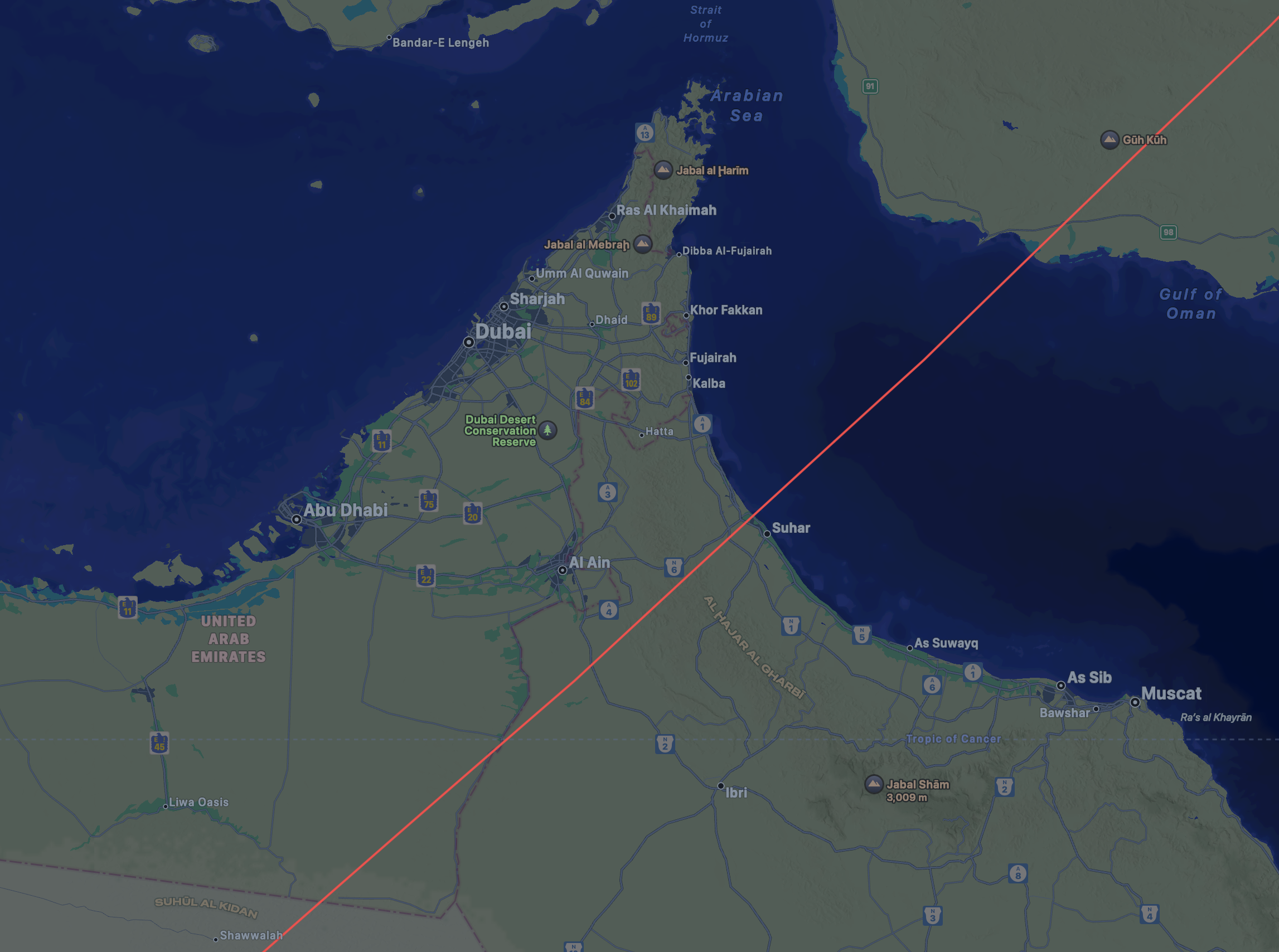
I think that the decision to stop at 5,000 km was made for a mixture of industrial and political reasons. As we’ve seen, the longer the distance the greater the risk of undermining the competitiveness of European airlines and pushing travellers to hubs just outside the EEA boundary. The big beneficiaries from a competitive point of view of including all long-haul flights would have been Turkish Airlines and the big Middle Eastern hubs. Only including flights up to 5,000 km will have the opposite effect, improving the competitiveness of European airline flights to Asia. You can see from the map below that the 5,000 km distance is just enough to pull flights to Dubai, Abu Dhabi and Doha into the scope of ETS. But the >5,000 km flights of European airlines which compete with connections over those hubs will not be subject to ETS costs.
The 5,000 km limit also has the politically convenient effect of excluding any flights to North America (see next map). Hitting those flights would have triggered a backlash from the USA.
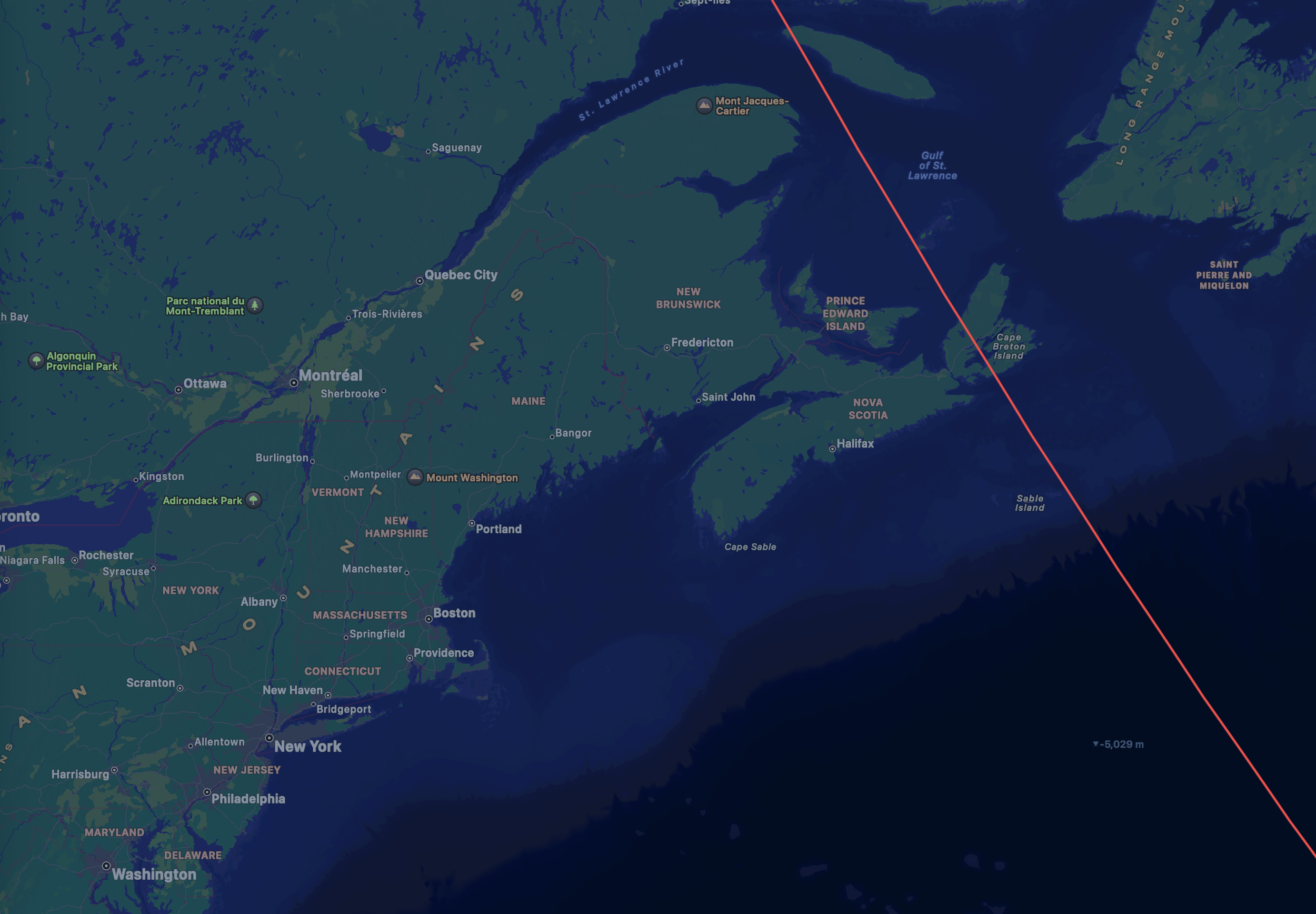
Overall, I think the choice of 5,000 km is a very clever piece of politics. It will raise substantial additional ETS money and sharply increase airline incentives to decarbonise on affected flights, whilst actually improving the relative competitiveness of European airlines relative to hubs in the Middle East, all while avoiding a spat with the USA.
Which airlines will pay the bill?
In the chart which follows, I’ve broken down the extra €1.4 billion by airline group. These airlines account for about 85% of the additional cost. As you can see, operators in Turkey and the Middle East (in red) will be heavily hit. The European operators (in blue) will also pay more, but even Lufthansa Group’s €95m additional costs are only 40% of what Emirates will have to pay. In fact, €29m of the Lufthansa Group’s bill actually comes from its 50% share of Turkish airline SunExpress. That’s more than Lufthansa itself will have to pay. IAG is not that affected, at least unless the UK decides to implement a similar measure (of which more later). Wizz and Ryanair have been lobbying for the ETS to be expanded to include long-haul flights on “fairness” grounds. With expected bills of €70m and €35m respectively, they might be wishing they’d stayed quiet.
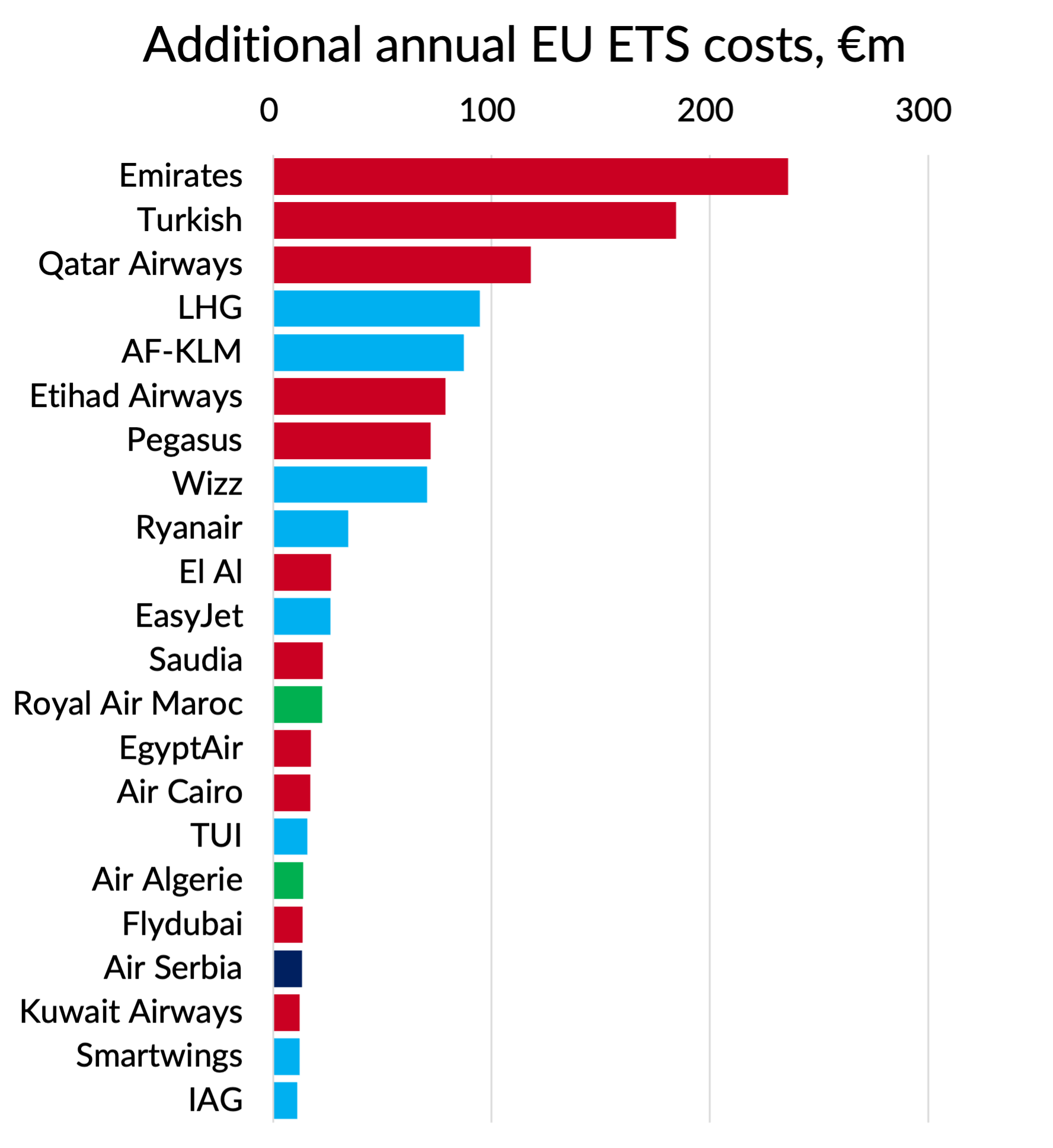
Source: GridPoint analysis
Will the UK follow suit?
One interesting question is whether the UK will choose to expand its own ETS scheme to include “mid-haul” flights. If exactly the same list of airports were included in an expansion of the UK ETS, the total additional cost to airlines would be around £340m, with Emirates, Qatar, Turkish and Etihad picking up half of the bill (see next chart).
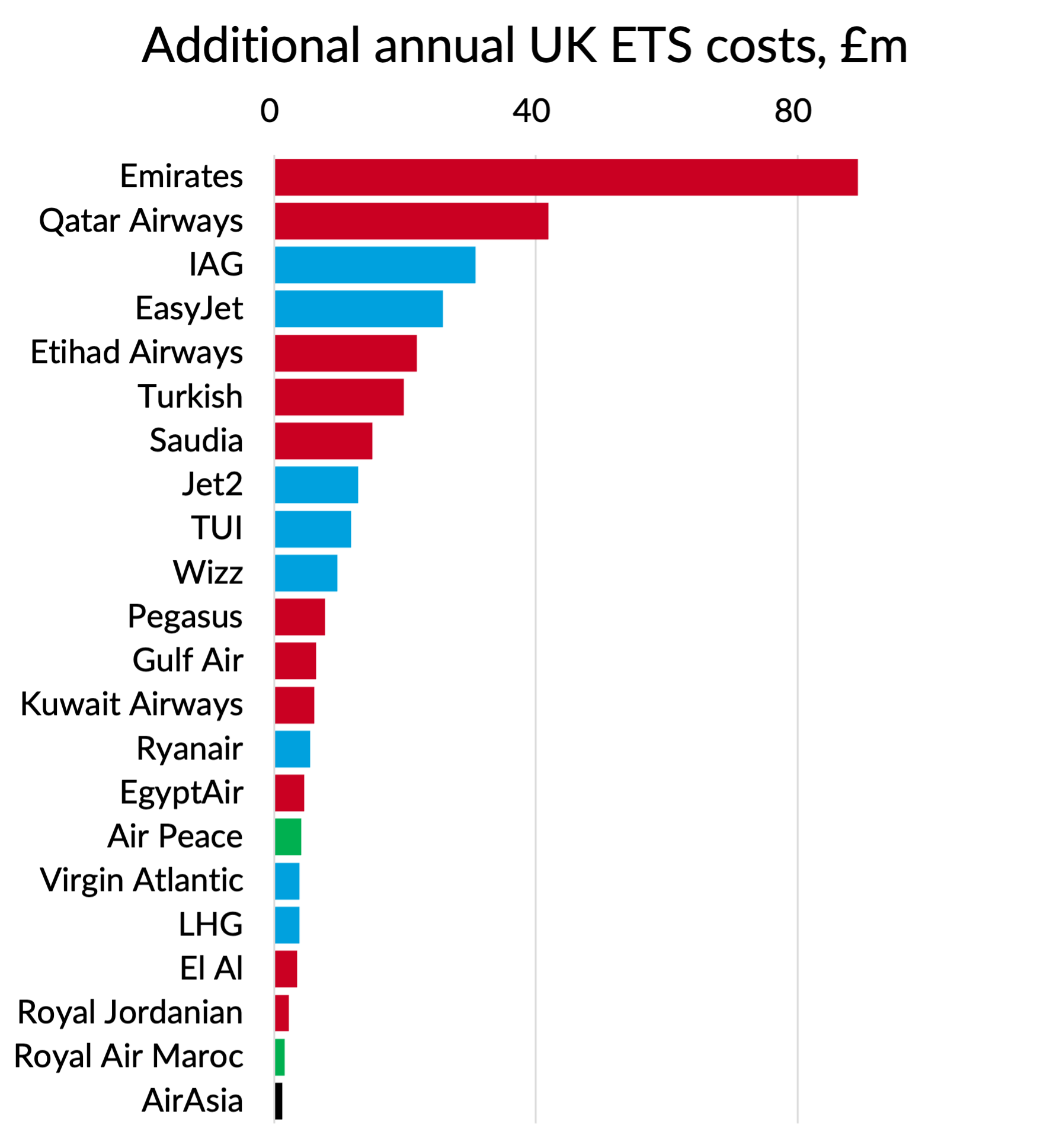
Source: GridPoint analysis
The truth is that it would be hard for the UK to justify using the same list of airports. How would they defend basing their cutoff on a distance from Frankfurt?
If the UK instead applied the same 5,000 km limit from its main hub, Heathrow, that wouldn’t capture the Middle Eastern hubs. On the map below, I’ve shown two lines. The upper one is the 5,000 km distance from LHR. None of the big three Middle Eastern hubs in Doha, Dubai or Abu Dhabi would be caught. That would require a 5,600 km limit, shown by the lower red line.
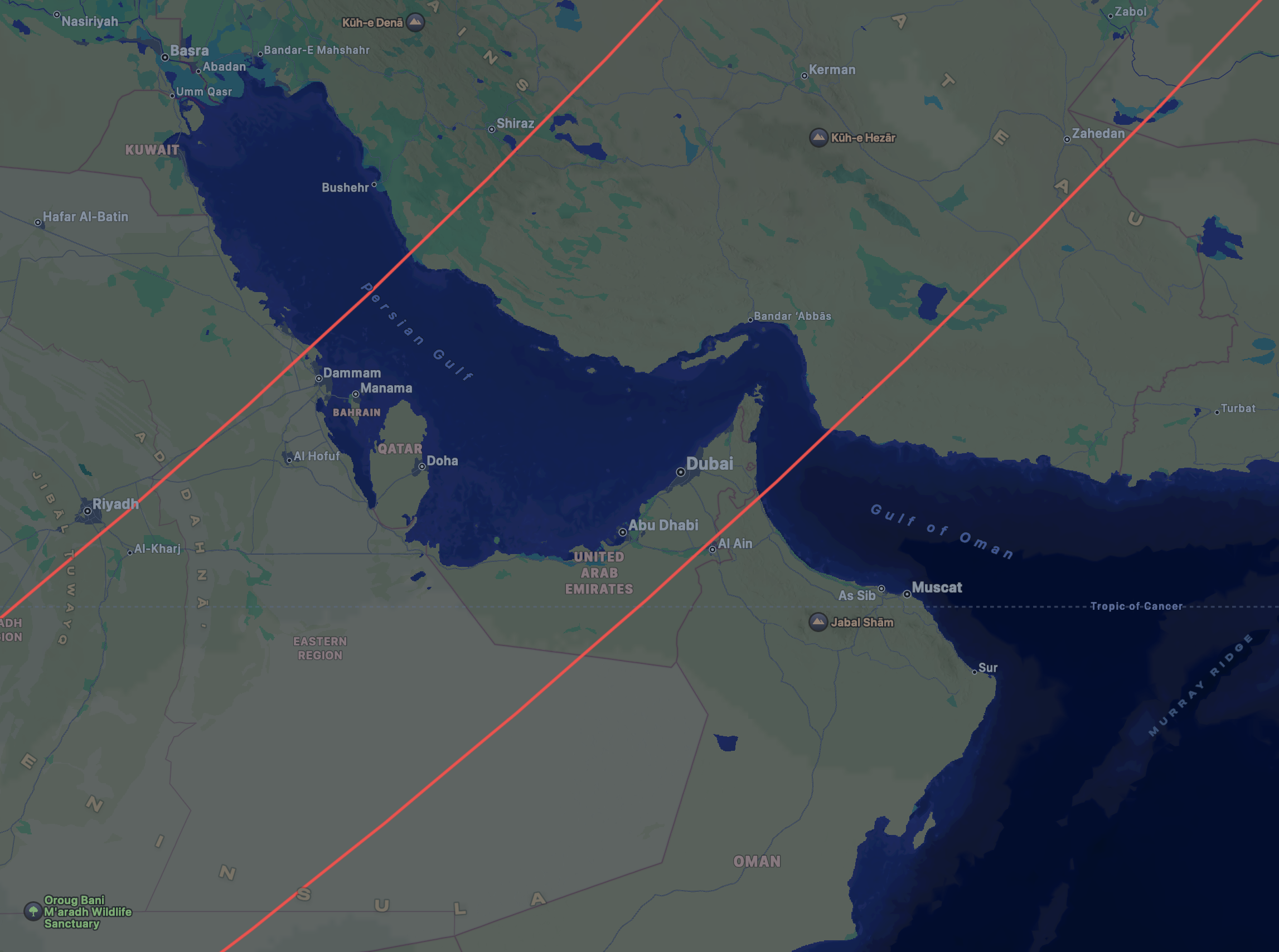
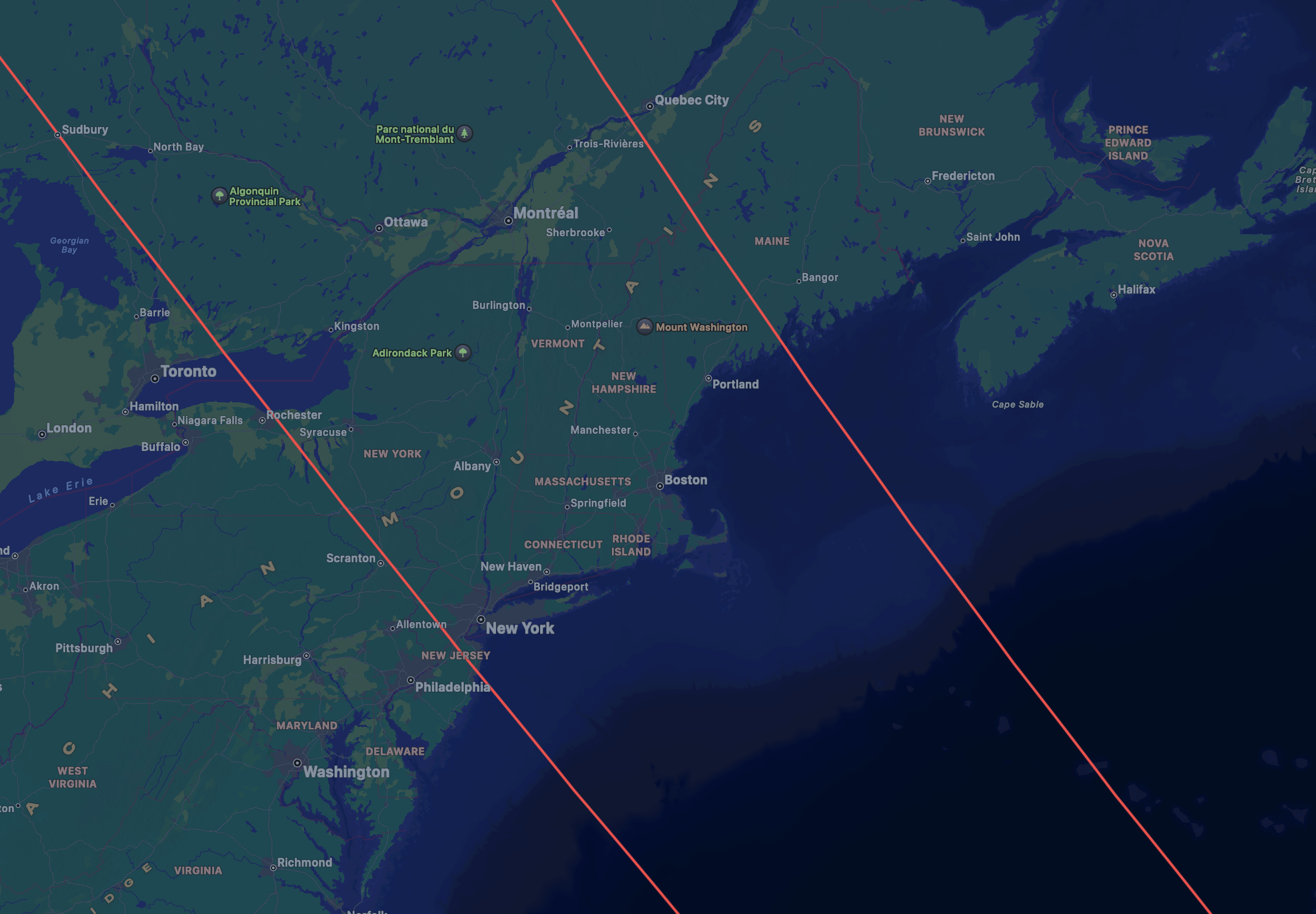
The problem with that is that whilst 5,000 km from LHR would exclude almost all the North American destinations (except Quebec), 5,700 km would bring in lots of big North American points, including New York, Boston and Montréal. For the UK to do what the EU has done and hit the Middle Eastern hubs without also impacting US flights, they’d need to apply a different standard to flights going East to those going West.
For these reasons, I suspect the UK will hold off on following the EU’s ETS expansion for now. Discussions are underway about bringing the UK ETS back into alignment with the EU scheme. The need for alignment could perhaps provide the political fig-leaf required for the UK to adopt the very politically convenient “5,000 km from FRA” rule.
Other changes announced by the EU
Other than the 5,000 km rule that attracted most of the attention, including from me, there were quite a few other changes included in the same proposal. One was the removal of the exemption for private jets. But the most interesting I think was allocating some of the the additional money raised to fund carbon removals and increase incentives for SAF investment in the EU.
If you are interested in the detail of those other proposals and a discussion of the implications, I’ll refer you to an excellent article by Dirk Singer over at SimpliFlying.